
GRAMA and Weber County Public Records
Utah's open-records law is the Government Records Access and Management Act, known as GRAMA. It applies to state and local government, including Weber County offices and the Sheriff. GRAMA sorts records into classes: public, private, controlled, protected, and exempt. The class decides who can see a record.
The full law sits in Utah Code Title 63G, Chapter 2. The basic right to inspect public government records is set in Utah Code § 63G-2-201. Free inspection and paid copies are two different things, so a public record is not always a free copy.
Court Records vs County Records
This is the line that trips up most requesters. A GRAMA request is the right tool for county agency records. It is not the fastest path to a District Court case file. Court cases follow judiciary rules through Utah Courts, while county records follow GRAMA.
| Record | Governed By | Where to Request |
|---|---|---|
| District Court case files | Judiciary rules | Utah Courts Xchange and request process |
| Sheriff reports and jail records | GRAMA | Sheriff GRAMA request |
| Clerk/Auditor and county records | GRAMA | County GRAMA request |
| Marriage records within 75 years | Vital record rules | Clerk/Auditor restricted request |
So use GRAMA for county and Sheriff files, and use Utah Courts for case files. The Weber County court records page covers the court side.
What County Records Cover
Weber County offices hold a wide set of records beyond the courts. The Clerk/Auditor runs elections, marriage licenses, passports, financial reporting, and property tax relief. The Sheriff keeps incident reports, jail records, and accident reports. The Recorder keeps land records.
The county's main gateway is the official Weber County website, which links to each office. For Sheriff records, the office directs people to its records request page and a GRAMA form, and asks for a valid photo ID. The Recorder keeps a separate GRAMA form for land and survey records, and the Clerk/Auditor handles election and financial records. Each office answers its own requests, so send the request to the office that actually holds the file. The Clerk of Court page explains who keeps which county record.
How to File a Weber County GRAMA Request
A GRAMA request is a written ask sent to the office that holds the record. The steps below work for most county and Sheriff records.
- Identify the office that holds the record, such as the Sheriff or the Clerk/Auditor.
- Complete that office's GRAMA request form and describe the records clearly.
- Attach a valid photo ID if the office requires one.
- Note whether you want to inspect records or receive copies.
- Request a fee waiver if you qualify, and explain the basis.
- Submit the request and keep a copy with the date.
The agency must respond within the time GRAMA sets. Filing and response rules sit in Utah Code § 63G-2-204.
Weber County GRAMA Request Form Fields
The county GRAMA form asks for a standard set of details. Filling each field clearly speeds the response. The fields below come from the Weber County Clerk/Auditor GRAMA request form.
| Field | What to Enter |
|---|---|
| Requester name | The person asking for records |
| Address / contact | Mailing and contact details |
| Records requested | A clear description of the records sought |
| Receive a copy | Checkbox if you want copies, not just inspection |
| Fee waiver | Checkbox tied to the fee statute |
| Signature and date | Standard request attestation |
A box also lets a requester state that their legal rights are directly implicated, which calls for a short explanation.
Fees and Fee Waivers
Looking at a record and owning a copy are different. Inspection of a public record is generally free, but copies can carry a charge. County GRAMA copy fees and waivers sit in Utah Code § 63G-2-203. The Sheriff also sets a flat fee for some items.
| Item | Amount |
|---|---|
| Sheriff traffic accident report (in office) | $15 per copy |
| GRAMA copy fees | Set under Utah Code § 63G-2-203 |
| Record inspection | Generally free for public records |
| Court record copies | Utah Courts fee schedule |
A fee waiver may apply when release serves the public interest. Ask for it in the request and explain why.
Private and Protected Records
Not every record is public. GRAMA holds back sensitive material in two main classes. Private records cover personal information, set out in Utah Code § 63G-2-302. Protected records cover material that could harm an investigation, security, or procurement, set out in Utah Code § 63G-2-305.
This is why active investigation files, jail-security details, medical information, and some personal identifiers are withheld. An agency can release part of a record and redact the rest. The inmate records page covers how these classes apply to jail records.
Appeals of a Denial
A denial is not the end of the road. GRAMA gives you a path to appeal when an agency refuses access. The appeal process sits in Utah Code § 63G-2-403.
Read the denial notice closely. It should explain the reason, the legal basis, and the deadline to appeal. Follow those instructions and act before the deadline passes. Keep copies of every letter and form along the way.
Court Records Through Utah Courts
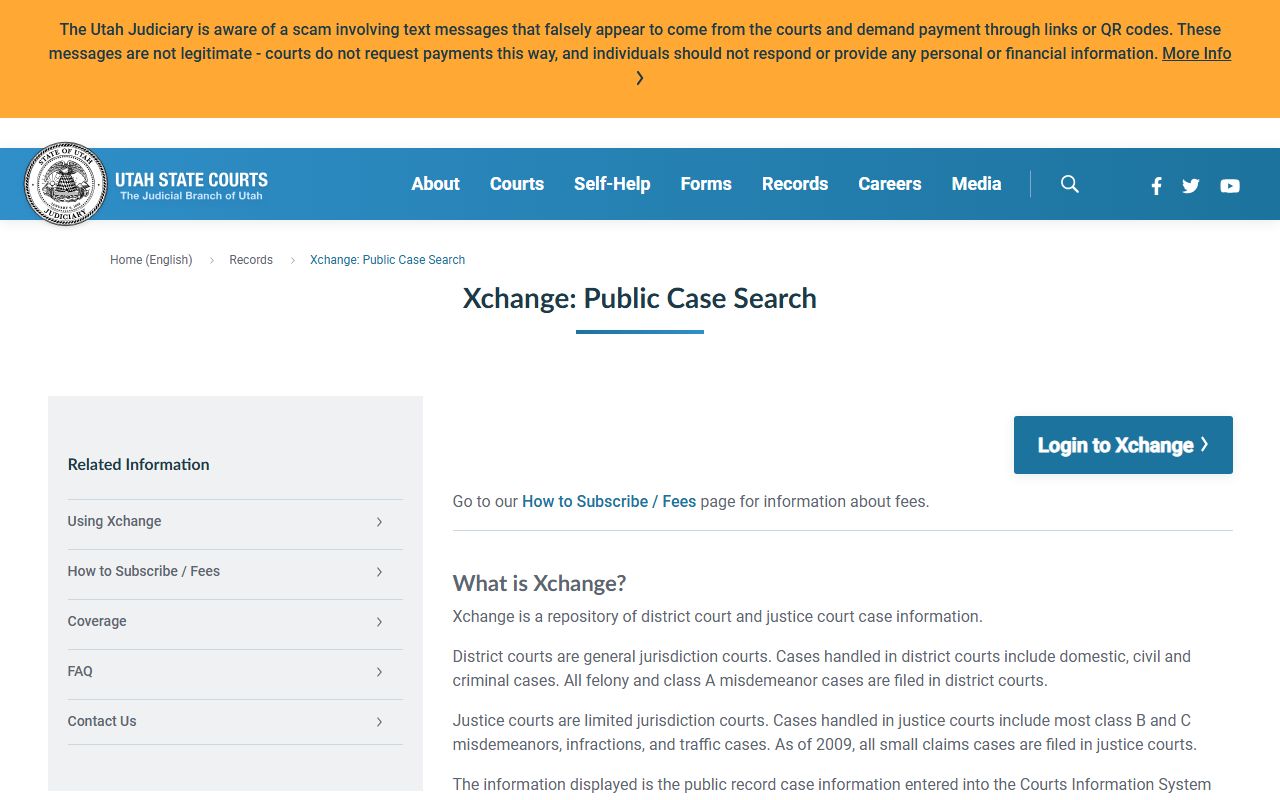
Court case files do not use GRAMA. They run through Utah Courts. The public tool is Xchange, which displays public District Court and Justice Court case information. An information page explains what the search covers.
Start with the Utah Courts Xchange information page.
The actual search runs on the Xchange portal, with guest, login, and account-setup options.
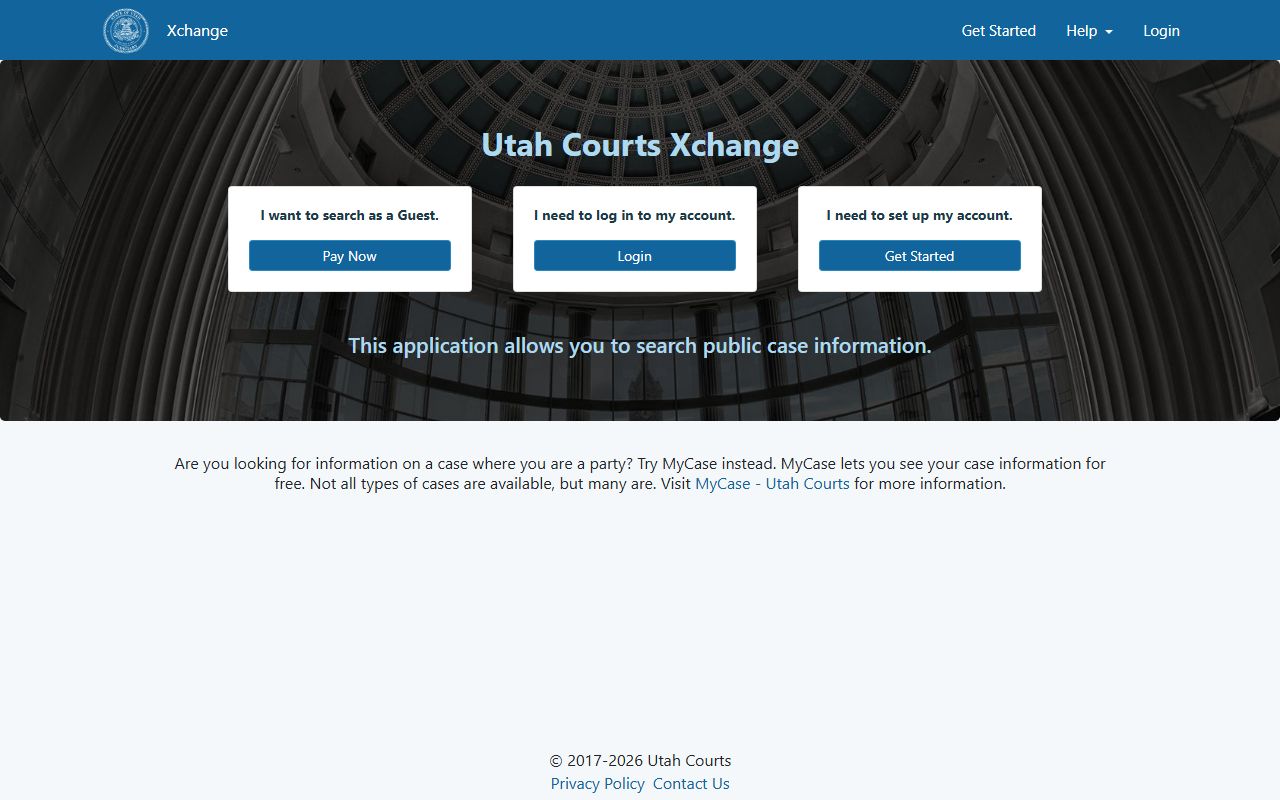
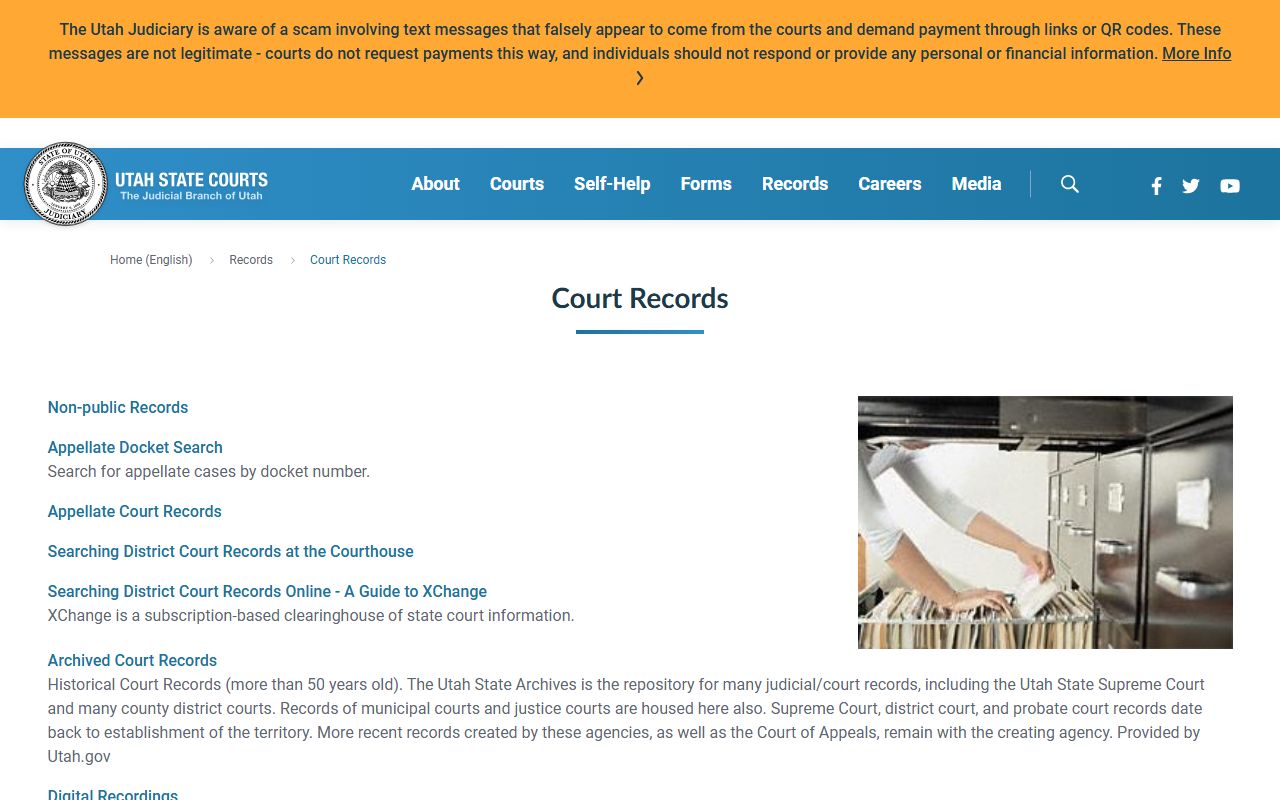
Open the Xchange portal to begin. The broader Utah Courts records page covers archived records and court record requests.
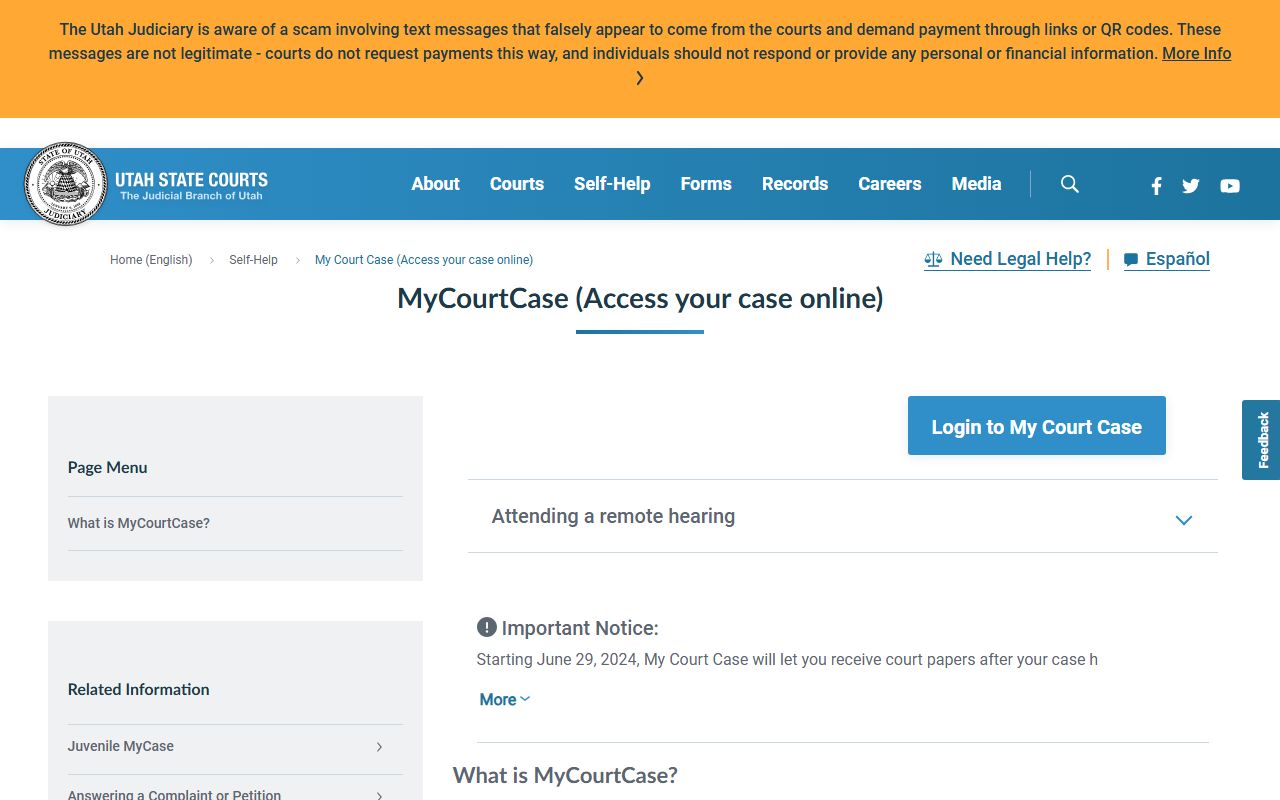
Parties to a case use MyCase for free access to their own case history and filed papers.
Weber County and the Second Judicial District
Knowing the district helps you find the right court records. Weber County sits in Utah's Second Judicial District, along with Davis and Morgan counties. Utah Courts publishes a map of the judicial districts that shows where the county falls.
The Utah map of judicial districts places Weber County in the Second District.
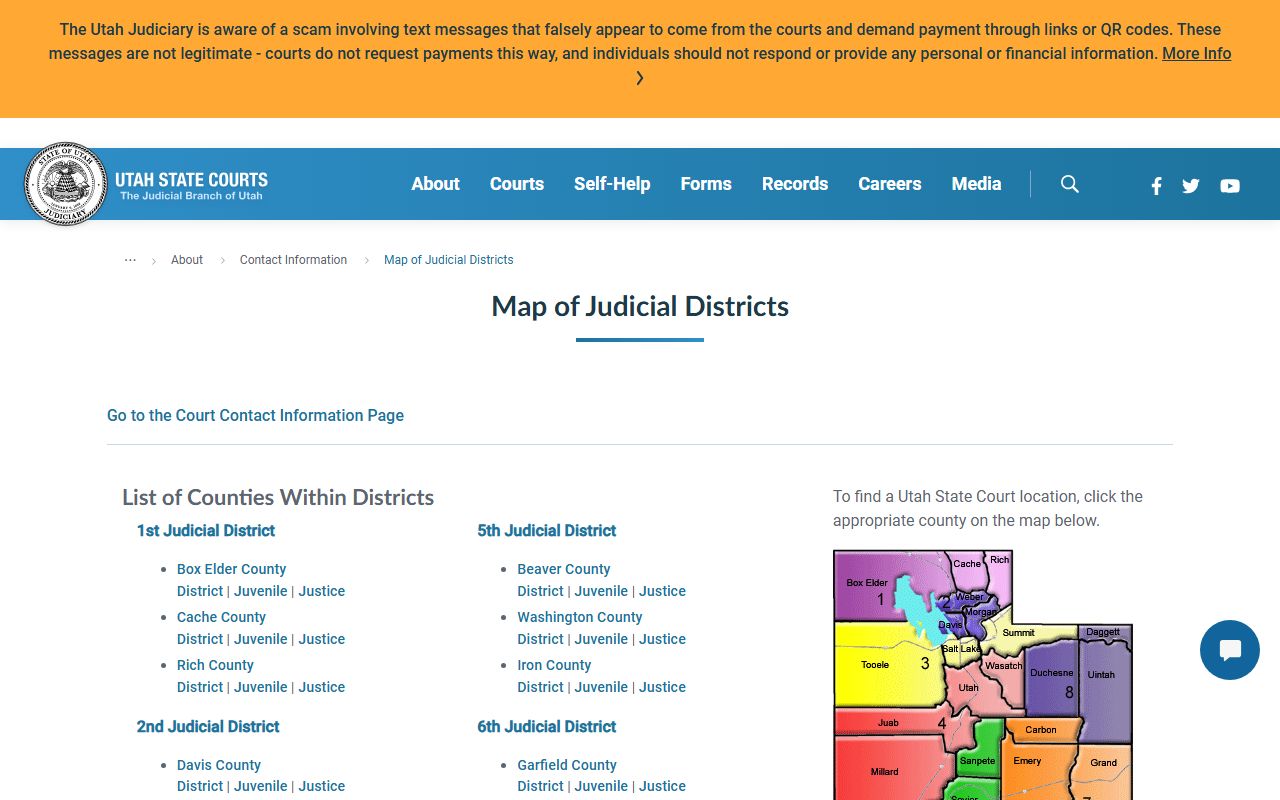
The Weber County District Court page covers that court in detail.
Marriage and Vital Records
Vital records follow their own rules, not plain GRAMA. Weber County treats marriage records within 75 years as vital records with limited access under Utah Code § 26B-8-125. Records older than 75 years are public. The Clerk/Auditor handles marriage records, while divorce decrees come from the District Court.
The marriage and divorce records page explains who may request a recent record and how the 75-year rule works.