
Probate in the Weber County District Court
Utah does not use a separate Surrogate's Court or Orphans' Court. Probate is handled by the District Court. For Weber County, the local court is the Weber County - Ogden District Court at 2525 Grant Avenue. The functional name for this work is the Probate Division of the District Court.
That single venue handles the full range of probate and related matters. Estates, wills, guardianship, and conservatorship all run through the District Court. So a probate search starts with the court that hears civil and domestic cases, not a county recorder or the marriage-license office.
Weber County - Ogden District Court
2525 Grant Avenue
Ogden, UT 84401
(801) 395-1079
Probate Division of the District Court
What Weber County Probate Records Cover
Probate is the court process that transfers a person's property after death and protects people who cannot manage their own affairs. The records track each step of that process. Many estates never need formal probate, but those that do generate a clear paper trail.
- Wills and petitions for probate.
- Appointment of a personal representative.
- Letters testamentary or letters of administration.
- Inventories, creditor notices, and accountings.
- Guardianship and conservatorship petitions.
Small estate affidavits and trust-related petitions also appear when Utah law allows them. The mix of records in a file depends on the kind of estate and whether anyone contests it.
Common Probate Terms
Probate uses words that rarely come up anywhere else. A short glossary makes the rest of a file easier to read.
- Testator
- A person who makes a will.
- Executor
- The person named in a will to manage the estate, also called a personal representative.
- Intestate
- Dying without a valid will, so state law decides who inherits.
- Guardianship
- A court role to care for a person who cannot care for themselves.
- Conservatorship
- A court role to manage another person's money and property.
Letters testamentary or letters of administration are the court papers that prove a personal representative's authority.
Searching Probate in Xchange
Public probate case information is searched through Utah Courts Xchange, the same portal used for other District Court cases. Start with the decedent's name, the personal representative's name, or a case number if you have one. Xchange can show parties, attorneys, documents, hearings, judgments, and outcomes.
Open the Xchange portal and choose guest search, login, or account setup. Guests pass through a Pay Now step, so check the fee page first. For a deeper walkthrough of the portal, the Weber County court records page covers the full search workflow.
Weber County Probate Record Fields
A probate case file follows a standard set of fields. Some may be public while others are restricted, depending on the case type. The table below lists what a probate search may return.
| Field | What It Shows |
|---|---|
| Case Number | The nine-digit Utah case number, where it applies |
| Case Type | Probate, estate, guardianship, or conservatorship |
| Decedent / Protected Person | The estate subject or the protected person |
| Petitioner | The person asking for appointment or action |
| Personal Representative | The appointed fiduciary, guardian, or conservator |
| Orders / Letters | Appointment order and letters, often needed by banks |
Letters and orders are the documents banks and title companies usually ask for, so note the case number to request them.
Requesting Probate Records and Copies
When a record is not available online, or you need a certified copy, use the official court request process. Utah Courts runs a Request a Court Record process for files not related to adoption. A county GRAMA form does not replace it for District Court probate files.
Start at the Utah Courts Request a Court Record page.
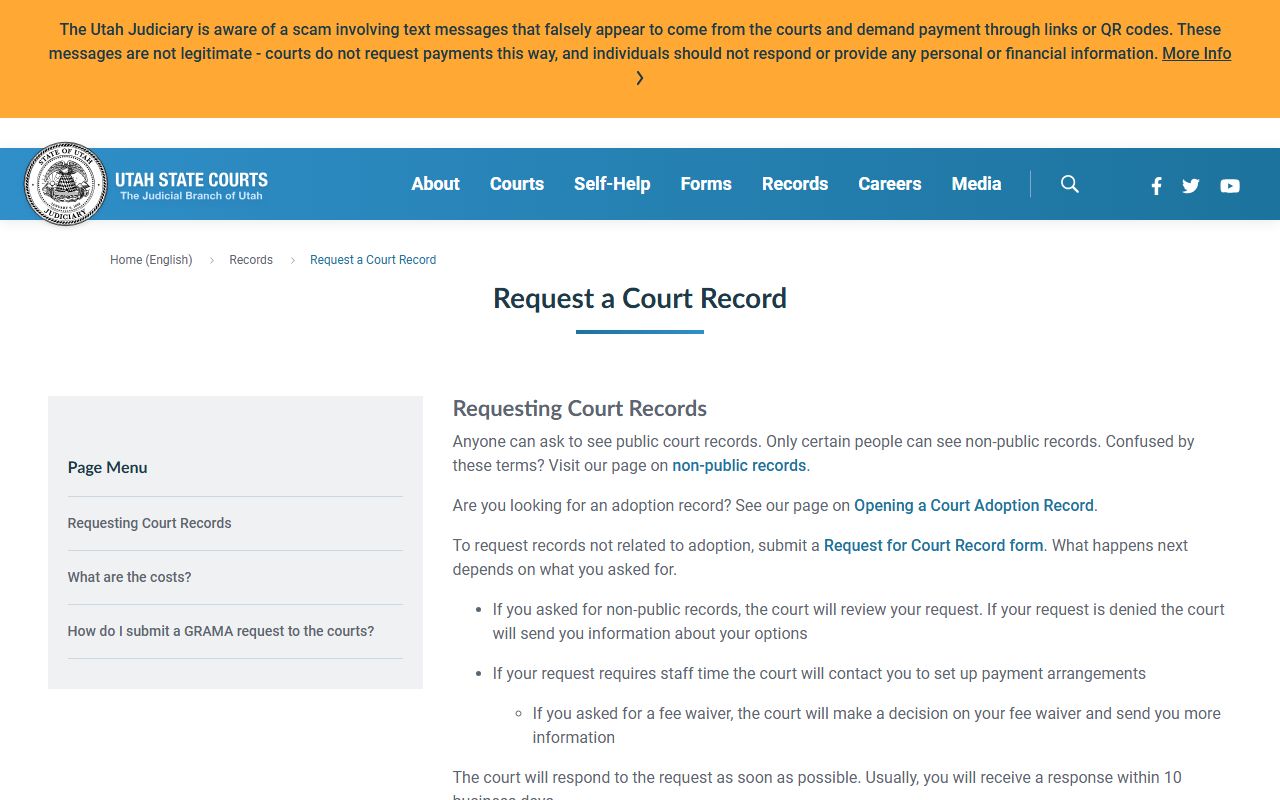
Probate filing and copy fees follow the Utah Courts fee schedule. MyCase is free for parties, while Xchange and certified copies carry charges.
| Service | Cost Basis |
|---|---|
| MyCase for case parties | No fee |
| Xchange guest or subscriber search | Fee-based; see the Xchange fee page |
| Probate filing fees | Utah Courts filing fee schedule |
| Certified copies and transcripts | Utah Courts fee schedule |
Guardianship and Conservatorship Privacy
Guardianship and conservatorship need careful handling. Both were named in the 2012 court rule that made some domestic-case records private. So a public researcher may see appointment events, public hearings, judgments, orders, and letters, while sensitive filings stay private.
Medical, financial, capacity, and family details can be restricted even when the docket is visible. The honest rule is that some public appointment and order information may remain open, but you should not treat guardianship records as fully public. For more on what stays open and what does not, see the court records page.
How a Weber County Probate Case Works
Probate follows a set order, though not every estate needs every step. The path below shows how a formal estate moves through the District Court.
- Decide whether the estate needs formal probate, informal probate, a small estate process, or none.
- File the petition in the District Court in the proper venue.
- Submit the petition, the original will if there is one, and required notices.
- Give notice to heirs, devisees, and creditors as required.
- The court appoints a personal representative when the requirements are met.
- The representative gathers assets, pays debts, and distributes property.
- The estate closes by statement, order, or final accounting.
Utah Courts publishes self-help probate forms and instructions for people without a lawyer.
Probate and Other Utah Court Types
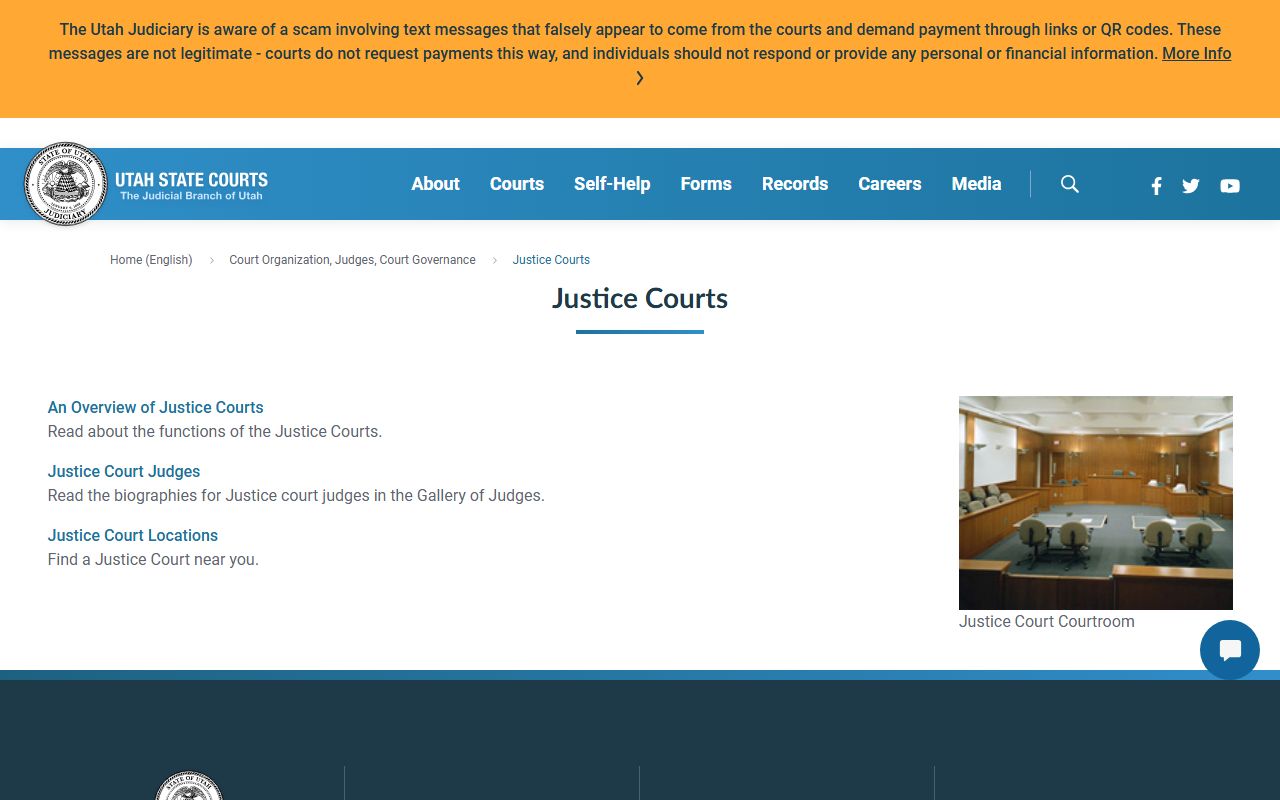
Probate sits in the District Court, but it helps to see where the other court types fit. Justice Courts handle a different set of cases, mostly minor matters, and never hear probate. Knowing the split keeps you from filing in the wrong court.
The Utah Justice Courts overview explains those limited-jurisdiction courts.
The Juvenile Court is separate again, handling delinquency, child welfare, and parental rights. Its work touches guardianship of minors in some cases.
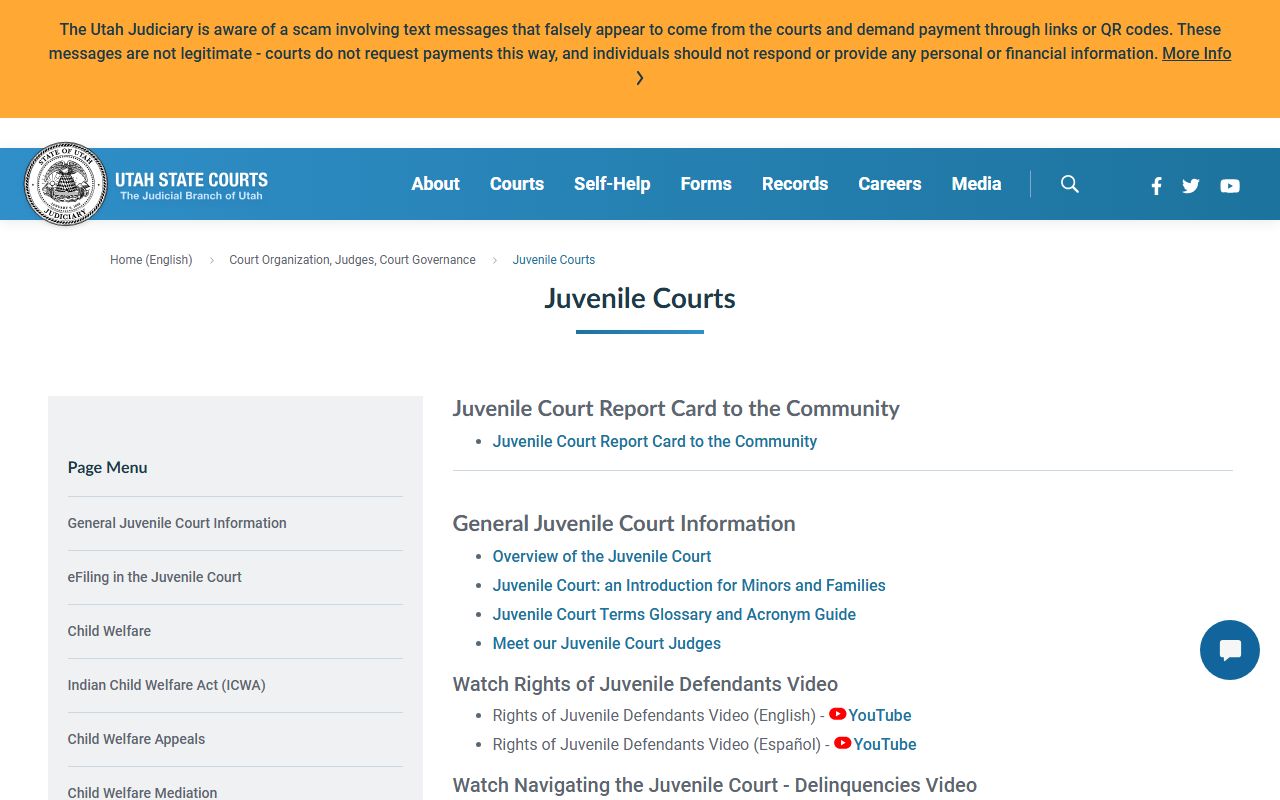
The Utah Juvenile Courts overview describes that court and its restricted records.
Guardianship of Minors
Guardianship of a minor can involve the Juvenile Court rather than ordinary probate. Access to juvenile case information is tight. Parents, guardians, and minors use Juvenile MyCase with a court-issued PIN, and document access is not yet available through that tool.
The Juvenile MyCase page explains who may use it and what it shows.
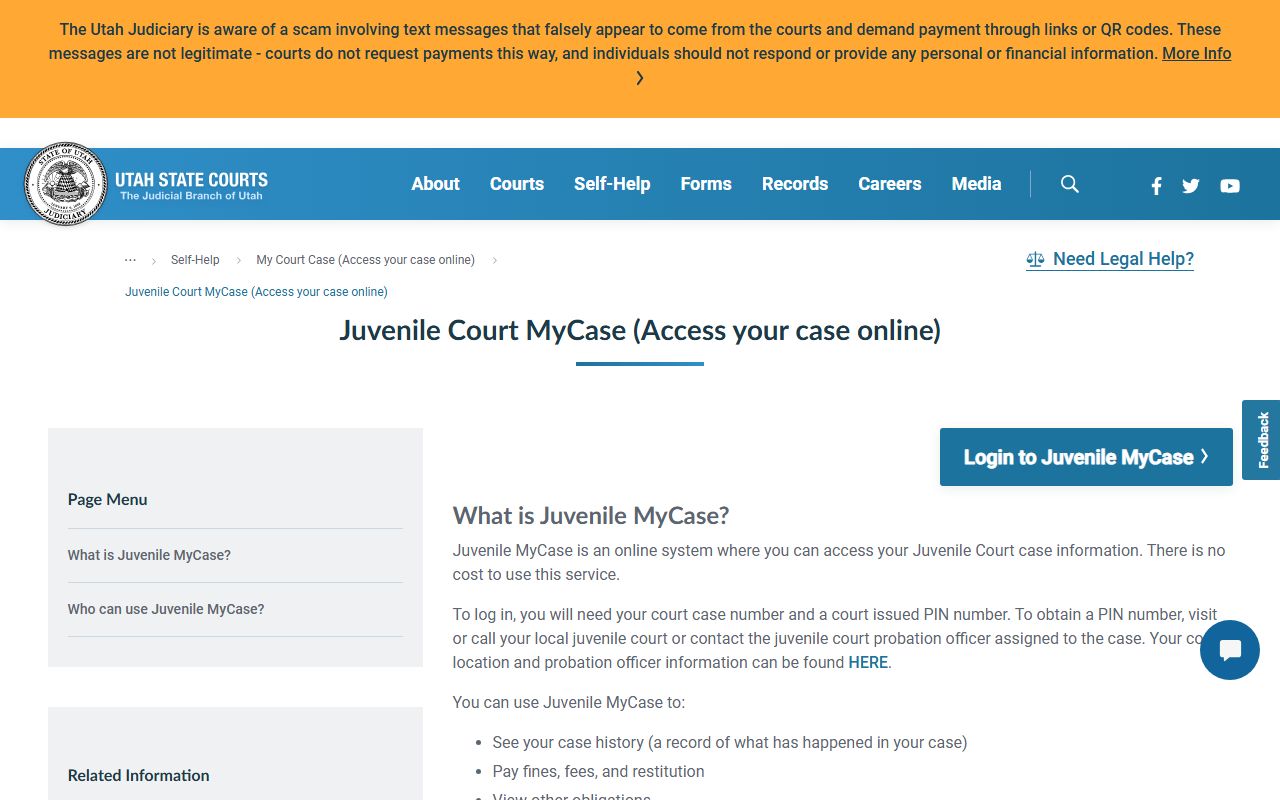
For adult guardianship and conservatorship, the District Court is the right venue, and Utah Courts publishes guardianship and conservatorship self-help resources.
Older Probate Records
Old probate files may not be online. Utah Courts notes that Supreme Court, District Court, and probate records reach back to territorial days, and older judicial records are often held at the Utah State Archives rather than the current court. So a probate file from decades ago may need an Archives search.
A probate case is a court file, not a county recorder record. Deeds and property transfers that follow probate may later appear in recorder records, but the estate case itself stays with the court. Do not rely on unofficial genealogy sites for certified probate copies.