
Weber County District Court Jurisdiction
The District Court is Utah's trial court of general jurisdiction. It has original power to try all civil cases and all criminal felonies, such as homicide, assault, sex and drug offenses, forgery, arson, and robbery. It also carries a large domestic-relations and probate caseload.
That broad reach is why the District Court holds the widest record set in Weber County. A felony, a divorce, a debt suit, and an estate can all sit in the same court. District judges can also issue extraordinary writs and review some administrative proceedings.
Weber County in the Second District
Weber County belongs to Utah's Second Judicial District, along with Davis and Morgan counties. Utah runs a state-administered court system, so the District Court is a state court, not a county-run office. The local court is the Weber County - Ogden District Court.
Weber County - Ogden District Court
2525 Grant Avenue
Ogden, UT 84401
(801) 395-1079
Second Judicial District
Use this Grant Avenue address for District Court hearings, records, and jury service. The county government building on Washington Boulevard is a different office.
Courts Serving Weber County
Several courts serve the county, each at its own location. The table below lists the main court contacts in Weber County. Justice Court details vary by city, so confirm those in the Utah Courts directory.
| Court | Address | Phone |
|---|---|---|
| Weber County - Ogden District Court | 2525 Grant Avenue, Ogden, UT 84401 | (801) 395-1079 |
| Ogden Jury Clerk | 2525 Grant Avenue, Ogden, UT 84401 | (801) 395-1059 |
| Second District Juvenile Court | 165 20th Street, Ogden, UT 84401 | (801) 334-4700 |
| Weber County Justice Courts | Varies by city; see Utah Courts directory | Varies |
For the full list of Weber County justice courts, use the Utah Courts directory filters for the county.
District Court vs Justice Court vs Juvenile Court
The three trial courts split the work by case type. Knowing the split keeps you from looking in the wrong place. The District Court takes the most serious cases, while the Justice Courts take high-volume minor cases.
| Court | Handles | Records Access |
|---|---|---|
| District Court | Felonies, civil, divorce, probate, guardianship | Xchange and MyCase |
| Justice Court | Class B/C misdemeanors, infractions, traffic, small claims | Xchange for public summaries |
| Juvenile Court | Delinquency, child welfare, parental rights | Restricted; Juvenile MyCase with PIN |
Municipal justice courts in some cities also handle local enforcement. The Weber County court records page covers how to search each one.
How a Case Moves Through the System
Cases can move up the court ladder on appeal. A matter often starts in a trial court and rises to the appellate courts if a party appeals. The flow below shows the path.
Case flow: Justice Court › District Court › Utah Court of Appeals › Utah Supreme Court
The Utah Court of Appeals reviews many District Court decisions, including domestic and criminal matters. The Utah Supreme Court is the state's highest court and takes selected appeals and constitutional questions. Most cases, though, begin and end in the trial courts.
Civil Cases in the District Court
Civil cases make up a large share of the District Court's work. These include contract disputes, tort claims, property disputes, injunctions, name changes, and debt collection. Public civil case information is generally searchable unless a record is sealed or private.
Since 2009, small claims cases are filed in Justice Courts, not the District Court. So a small money dispute usually goes to a Justice Court, while larger civil suits stay in the District Court. The court dockets page shows how to follow a civil case event by event.
Felony Criminal Cases
All felony and class A misdemeanor cases are filed in the District Court. A criminal file can include the charging document, probable cause statements where public, warrants, bail and bond, hearings, pleas, disposition, and sentence. After an arrest, an inmate is scheduled for arraignment, where the case begins.
The Weber County arrest records page covers booking data, and the warrant records page covers warrants tied to District Court cases. A charge is only an accusation until the court enters a disposition.
Domestic Relations
The District Court hears family cases. These include divorce, child custody and support, paternity, and protective orders. A 2012 rule change made some records in these cases private, so a search may confirm a case without showing every filing.
Public case history with minute entries of hearings, judgments, orders, and decrees usually stays open unless a judge restricts it. The marriage and divorce records page explains what stays public in a divorce case.
Probate and Guardianship
Probate is a District Court matter in Utah. There is no separate probate court. The District Court handles wills, estates, the appointment of personal representatives, guardianship, and conservatorship. Guardianship and conservatorship records carry privacy limits.
The probate records page covers the estate process, the records a file holds, and how to request copies through the court.
Appeals and Writs
The District Court is not only a trial court. District judges can issue extraordinary writs, and the court can act as an appellate court for some informal administrative proceedings. Most appeals from the District Court, though, go up to the Utah Court of Appeals.
Appellate dockets and opinions are searched through Utah Courts. A party who loses at trial has a limited window to appeal, so deadlines matter. Missing the window can end the right to appeal, so check the rules or talk to an attorney before the time runs out.
Utah Court System Resources
The District Court connects to a wider set of Utah court tools. The Utah State Courts homepage links to Xchange, MyCase, court records, traffic resources, and self-help.
Start at the Utah State Courts homepage.
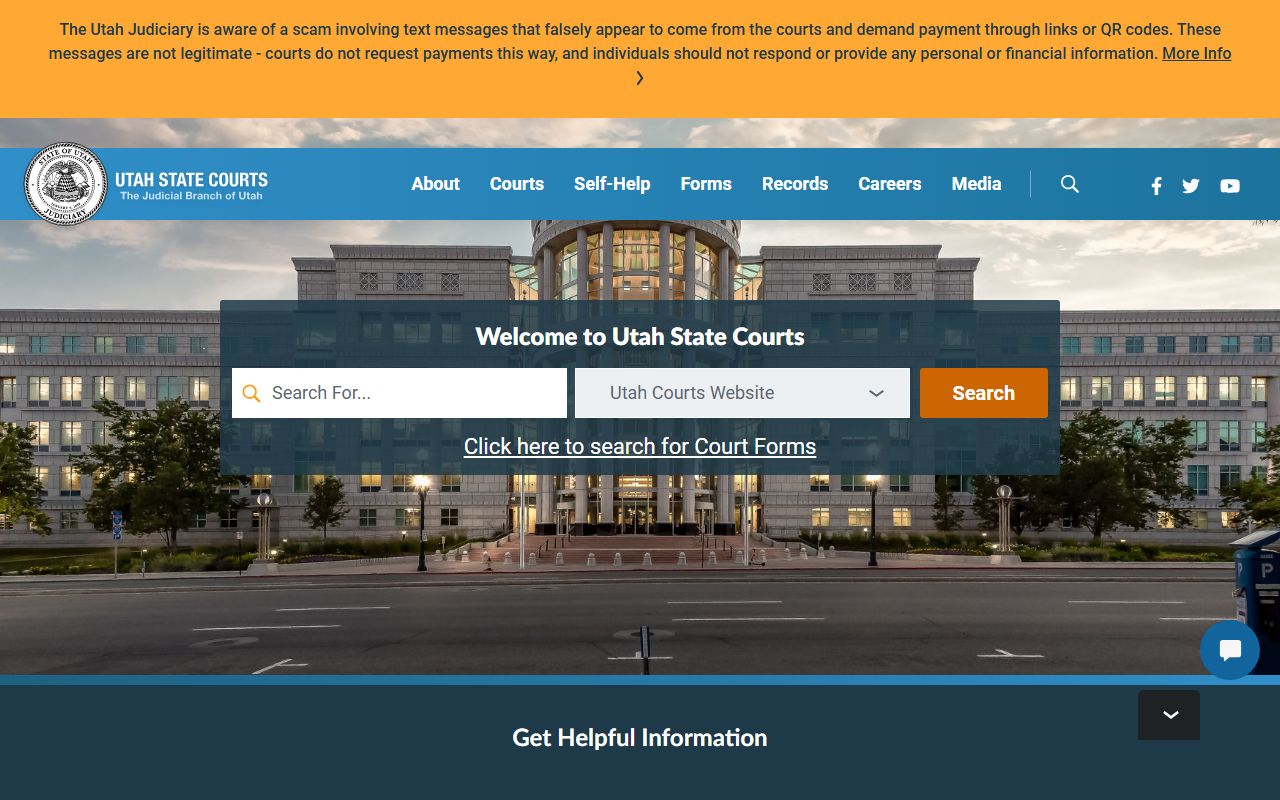
The District Courts page explains the trial court of general jurisdiction across the state.
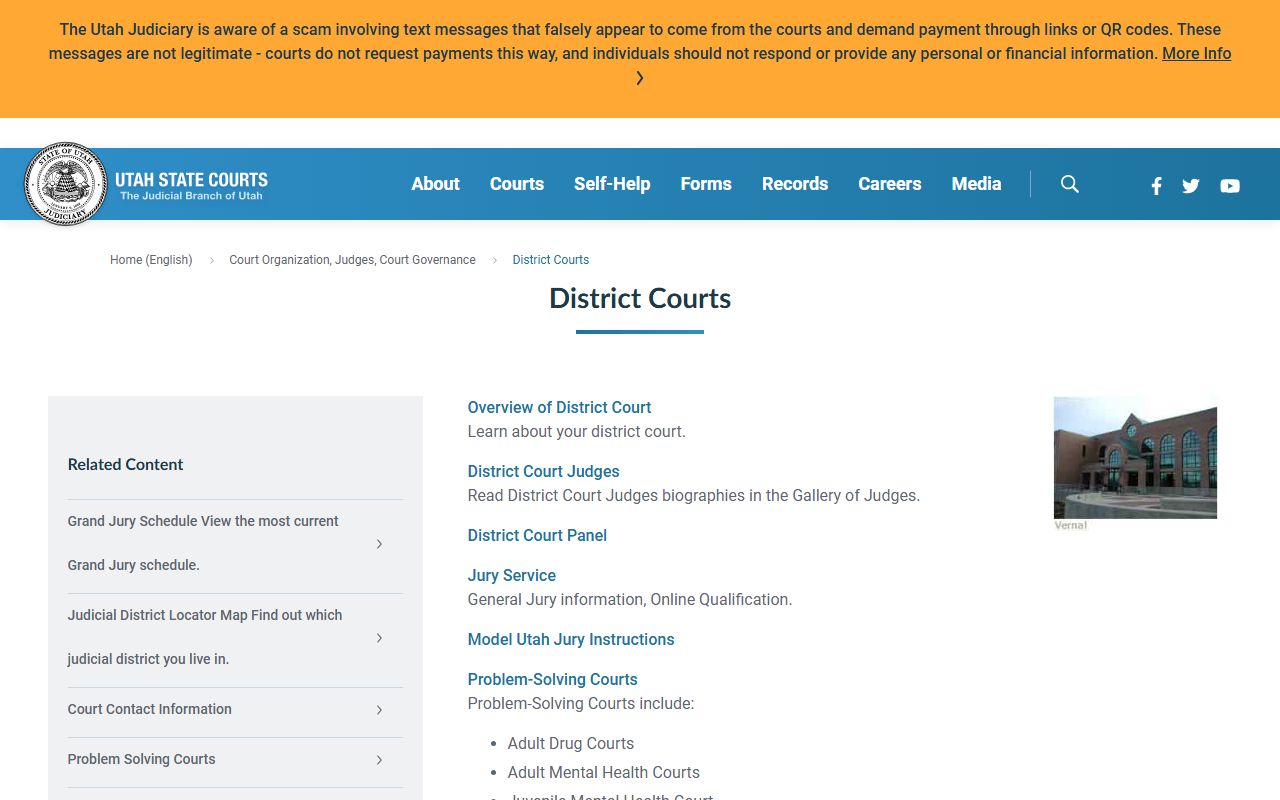
The Utah District Courts page sits within the broader court organization. The Utah Courts about page lays out how the court system is built.
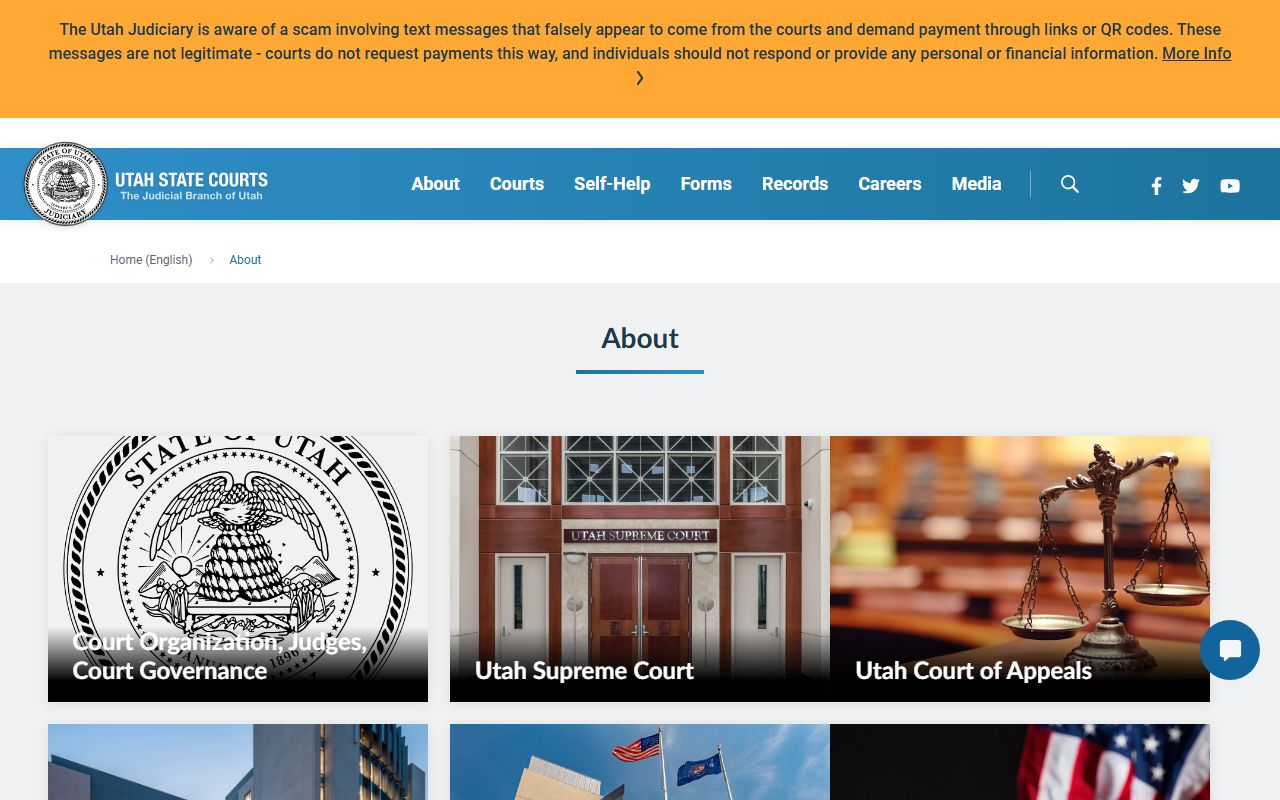
The Utah Courts about page covers court organization and court types.
Warrants and the District Court
The District Court can issue warrants in felony, class A misdemeanor, probation, and failure-to-appear matters. Active warrants across Utah are checked through one free statewide tool, which the Department of Public Safety links to.
The Utah DPS BCI warrant page points to the statewide search.
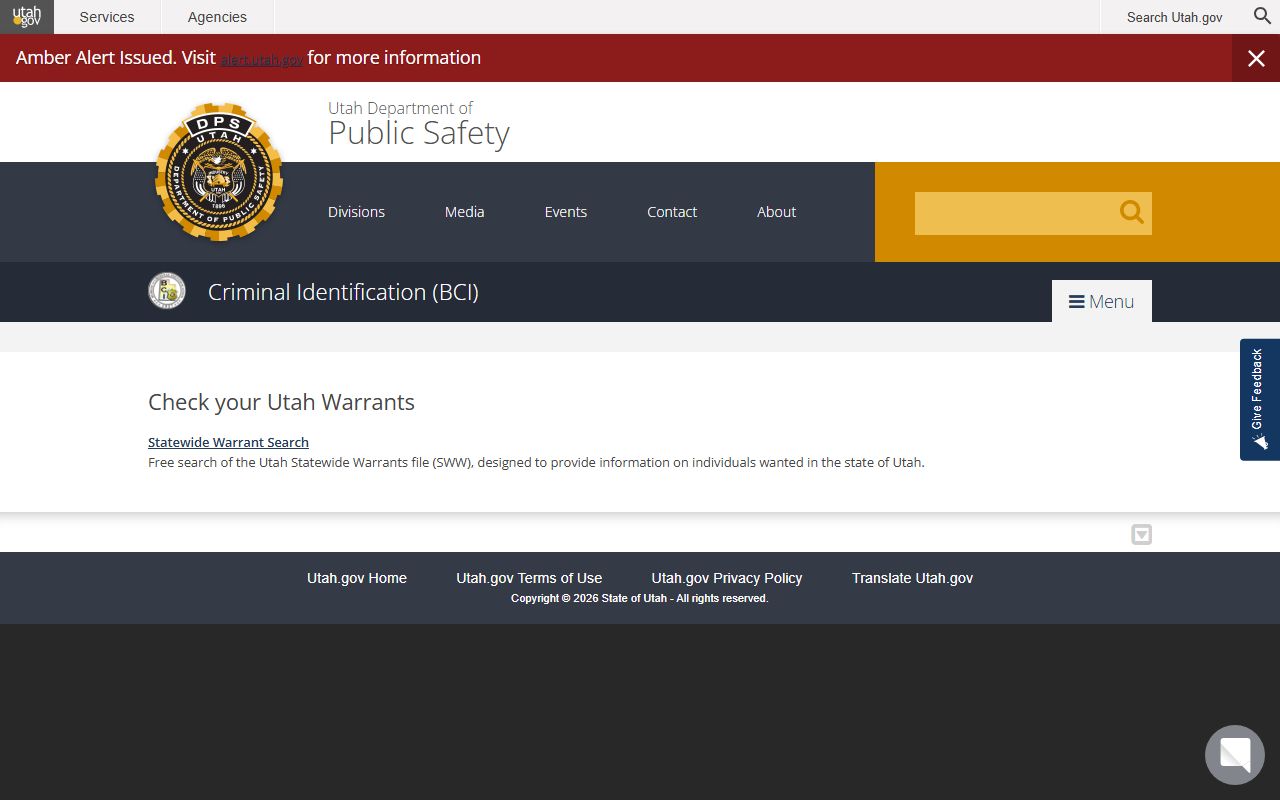
The search itself runs on the statewide warrants portal, free to use by name.
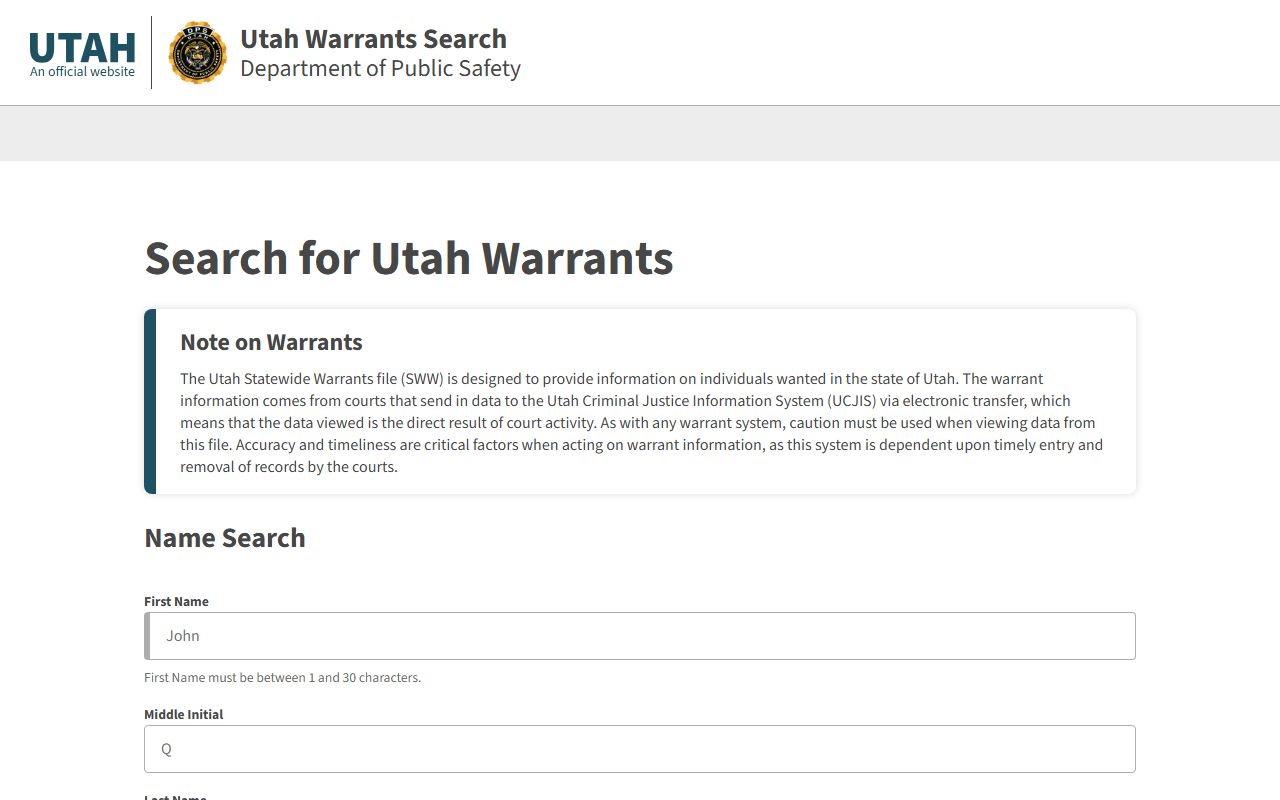
Use the Utah Statewide Warrant Search to check for a warrant, then contact the issuing court. The warrant records page covers the full process.